

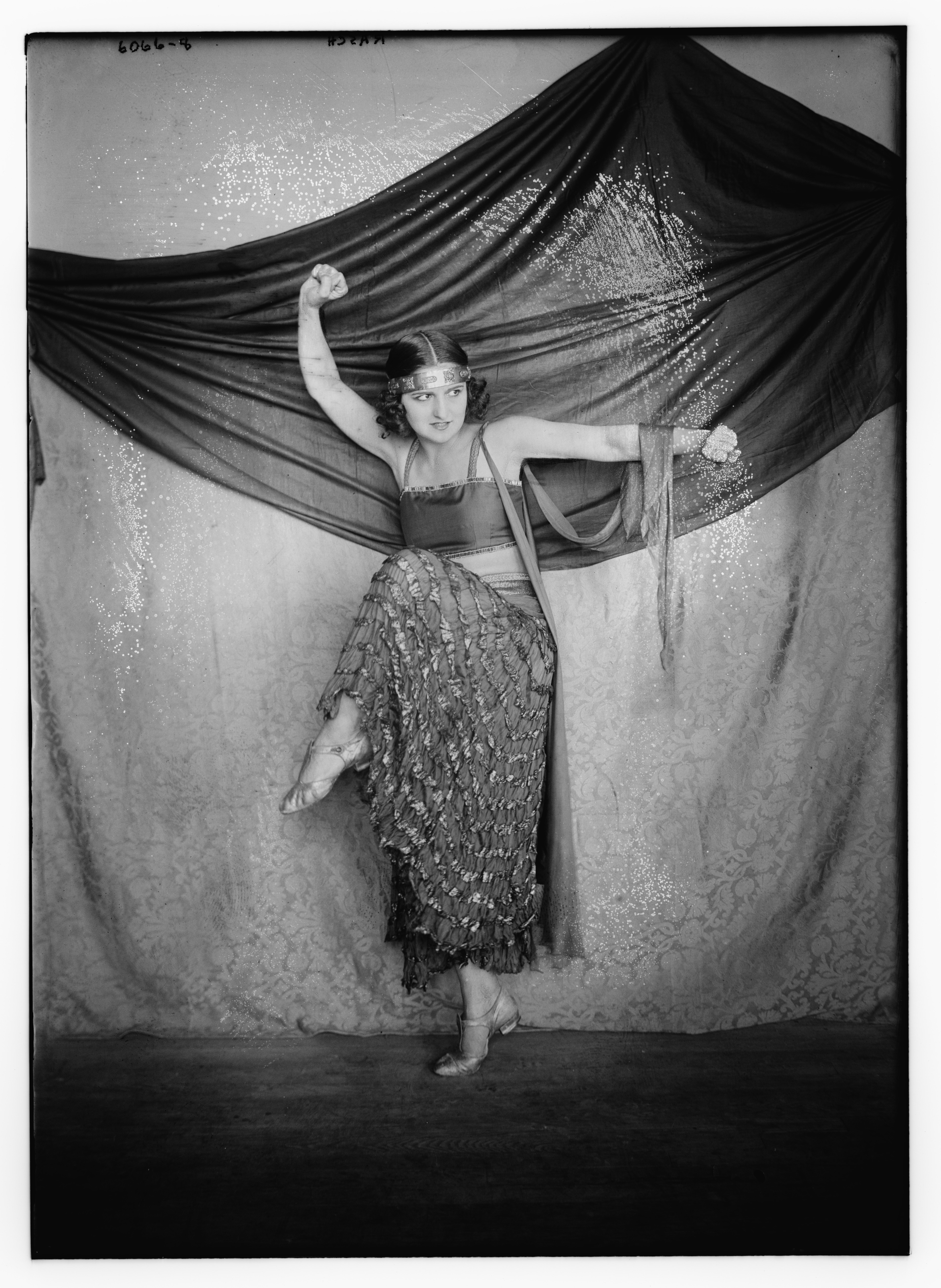
Albertina Rasch (1891-1967) was a remarkable woman. Ambitious and admired, a ballerina, business owner, choreographer, dancer, entrepreneur, furlana expert, groundbreaker, head of her own companies, immigrant, jazz-lover, Keith-Albee Circuit headliner, leader, modern dancer, naturalized citizen, observer, peculiarly American (in Dimitri Tiomkin’s own words), quickstudy, recruiter, stage and screen choreographer, teacher and taskmaster, unbelievably talented, vaudeville producer, well-connected, xenophile, young-at-heart, and zestful.
During the course of her enviable thirty-year career the European-born and Viennese-trained dancer brought American dance to the masses, first as an individual through traditional ballet performances with opera companies, then through her eponymous dance troupe through vaudeville programs and later concert performances of long-form works, and finally through her choreography of ballets in Broadway musicals and then Hollywood film musicals.
Clearly Albertina Rasch led the field when she choreographed George Gershwin’s 1924 work Rhapsody in Blue just two years after it was written and long before it became acknowledged as one of the great musical compositions of the 20th century. Similarly, Rasch provided the choreography for a ballet based on Gershwin’s An American in Paris for the 1929 Broadway production of Show Girl when that orchestral work had only been written in the previous year.
Another New Yorker, George Grantham Bain, founder of the first news photography service in 1898 in the City, knew of Albertina Rasch’s fame. His eponymous Bain News Service accumulated photographs, with a special emphasis on people and events in New York, for printing and distribution to newspapers around the country. Below Rasch’s image can be seen in photographic prints made from glass-plate negatives.
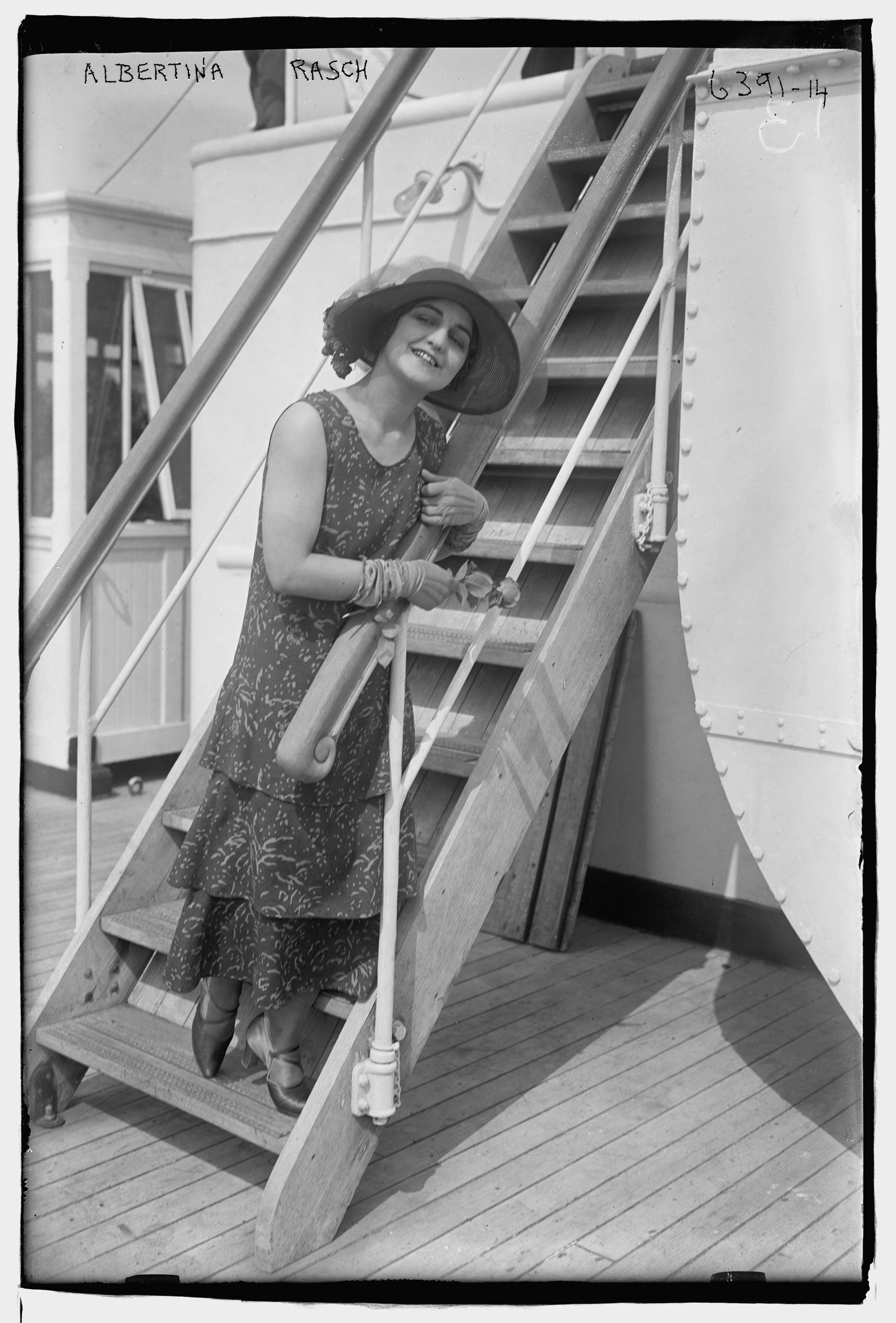
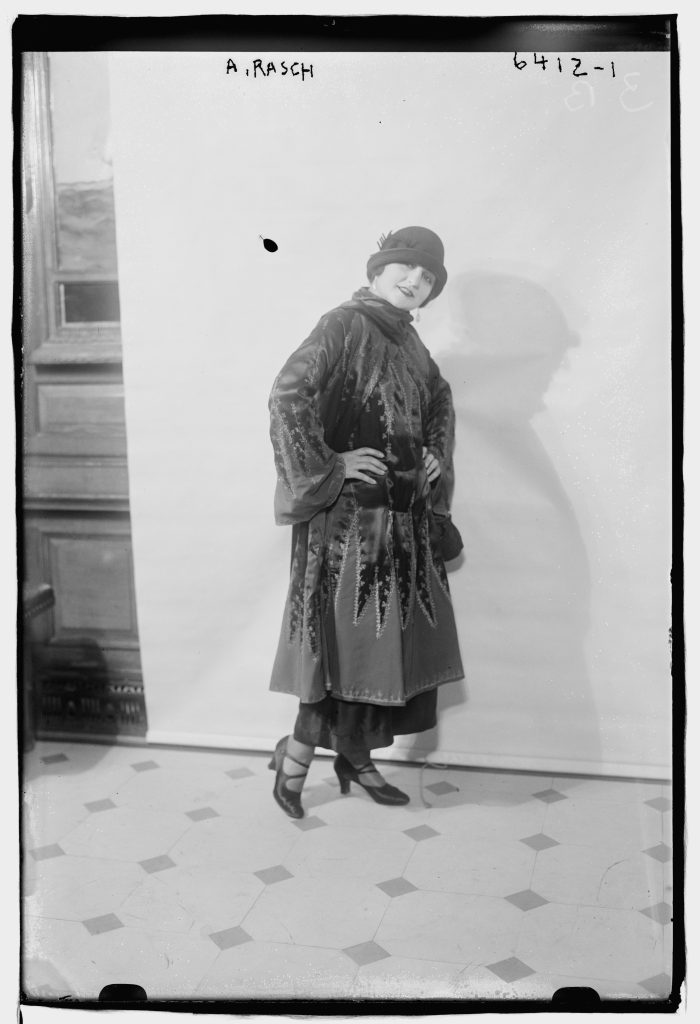
The images above and below are from the George Grantham Bain News Service photograph collection at the Library of Congress.
Also at the Library is a 1914 book, “The Dance: Its Place in Art and Life,” by Troy and Margaret West Kinney, in which the final chapter opens, “That great dancing is a useful and desirable addition to human happiness needs no argument.” Exposure to ballet at the time, emerging from the Victorian era, came to twentieth-century American audiences largely through opera companies and their corps de ballet.
From the Kinneys, “In 1913 Sr. [Luigi] Albertieri took the post of ballet-master of the new Century Opera Company, with Miss Albertina Rasch, formerly of the Vienna opera, as première. The public’s readiness to recognise good work was demonstrated during the Century’s first presentation of The Jewels of the Madonna. After the act in which the Tarantella is danced, the audience demanded that Miss Reach [in the role of Grazia] respond, with the two principal singers, to the curtain-calls.”
One can imagine the roar of the crowd from the rafters: Grazia! Grazia! Grazia!
As America’s first tango craze was ebbing in 1914, Washington Times writer Eleanor Ames reached out Albertina Rasch, a Furlana expert, for her article, “‘Furlana’ to Follow the Tango.” Rasch said, “The Furlana is the folk dance of the Venetians…It is a charming dance, and combines the steps of the minuet, polka, and waltz. It is full of grace and has a certain snap and fire and abandon which makes it distinctive.” In the interview Rasch goes on to say Americans, far behind the Austrians and Russians, are ”awakening” to the possibilities of dance, in general, as ideal exercise, for social status, and for mental and physical relaxation. Rasch added, “Of course, to me learning how to dance seems as necessary as learning how to read and write and figure the interest on the dollar.” She would go on to open Albertina Rasch schools of dance.
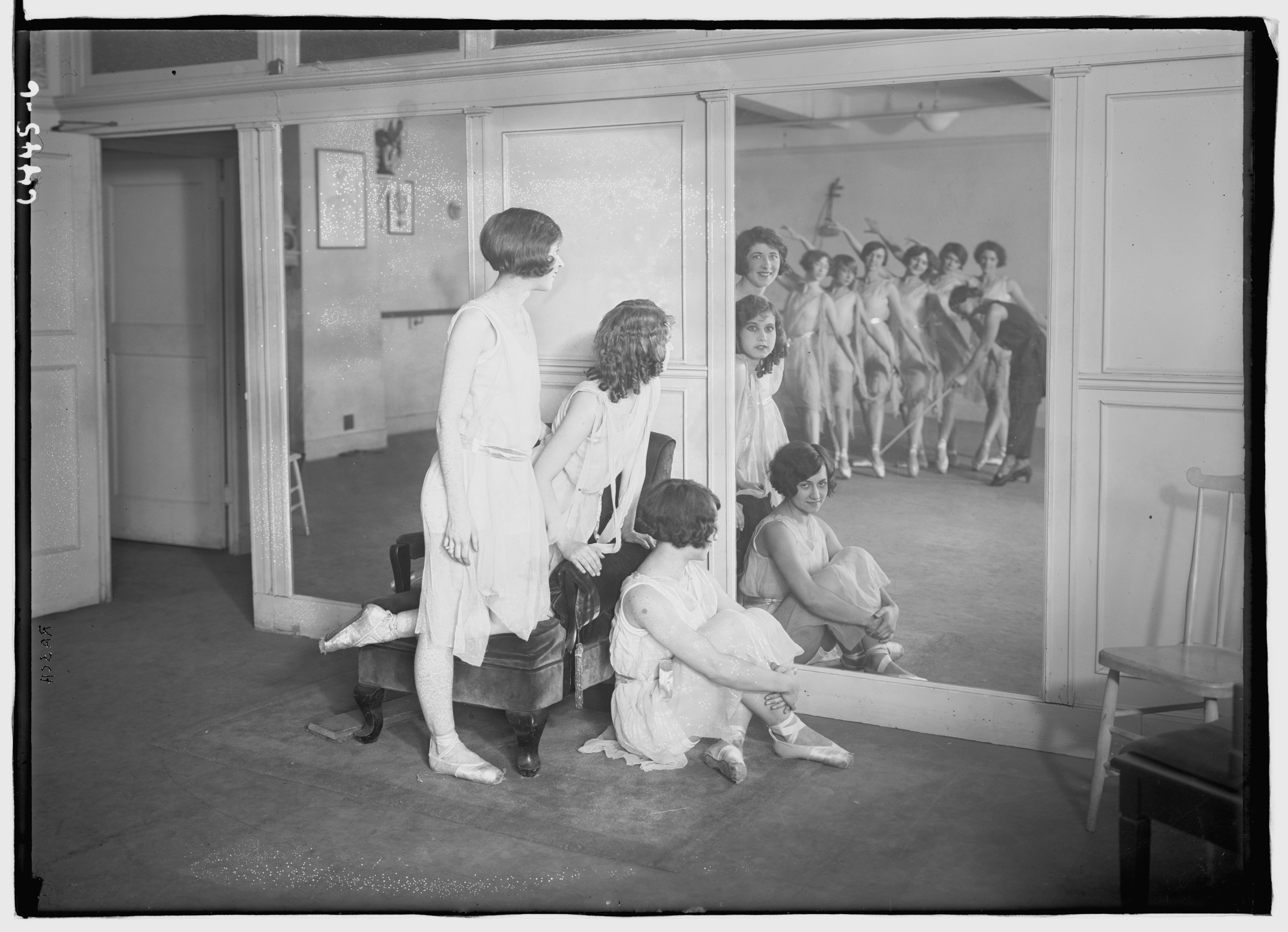
By the time the now-better-known choreographer Agnes de Mille joined the Ballet Theatre (now American Ballet Theatre) in 1940, Albertina Rasch had already developed her vision of the New World Ballet, which combined European ballet tradition with an emerging American dance idiom into the singular Albertina Rasch and the American Ballet. The latter uniquely combined facets of ballet set to classical music with rhythms and movements associated with American jazz and syncopated popular music. Americans by the tens of thousands applauded performances in cavernous venues including the Hippodrome, Lewisohn Stadium, and the Hollywood Bowl.
RECORDINGS: Albertina Rasch & The Great American Ballet; Paris Under the Stars
An astute businesswoman, Albertina Rasch created her own brand as is evident from the following list of her enterprises.
Albertina Rasch Ballet, founder and owner
Albertina Rasch Dance Studio, founder and owner
Albertina Rasch Dancers, founder, owner, and promoter
Albertina Rasch Girls, founder, owner, and promoter
Albertina Rasch Russian Tea Room, president, it later became known simply as the Russian Tea Room
Albertina Rasch—School for Ballet, Aesthetic Dancing, Pantomime, and Stage Deportment, founder and owner
Albertina Rasch Studios, founder and owner
We salute Albertina Rasch for her contributions to the art form of ballet, choreography and dance; for her efforts to train future dancers; and for her vision to create the American ballet.
Albertina Rasch never changed her name, even after her 1926 marriage to the pianist and budding composer, Dimitri Tiomkin, who affectionately called her “Albertinotchka.”
Let’s not forget that Tiomkin didn’t come to America to write film music, he arrived to provide musical accompaniment for the Albertina Rasch Dancers.
Recalling their first meetings, the composer later wrote of Rasch, “her personality struck me with a firm impact, and I found it perplexing. I had never met a young woman like her before, although I had known many a ballerina.” A quick perusal of Tiomkin’s autobiography makes it clear that it was from his wife that the four-time Academy Award winning composer learned about the entertainment business, pleasing audiences, and collaboration.
Learn more about Albertina Rasch from her brief biography, found here.
Sources
Library of Congress blogger Alli Hartley-Kong concludes “Meet the Subjects of Latinitas in the Library of Congress’s Collection!” with a challenge to follow in the footsteps of Juliet Menéndez, the Guatemalan-American author of Latinitas: Celebrating 40 Big Dreamers, to create portraits of fascinating women using Library collections. This post is a result of that challenge. All of the material cited herein can be found in digitized form among the Library of Congress collections.
The Dance: Its Place in Art and Life by Troy and Margaret West Kinney, New York, Frederick A. Stokes company, 1914.
“‘Furlana’ to Follow the Tango,” by Eleanor Ames, Washington Times, April 29, 1914.