
As a thirty-seven-year-old record producer rushes out of Nashville Recorders to another appointment he eyes a distinguished-looking gentleman standing in front of KHJ Radio attempting to hail a cab. Hailing a cab on Melrose Avenue in 1965 Los Angeles? Good luck. According to Google AI, “In 1965, you could stand on Melrose Avenue indefinitely and likely never successfully hail a cab from the street.”
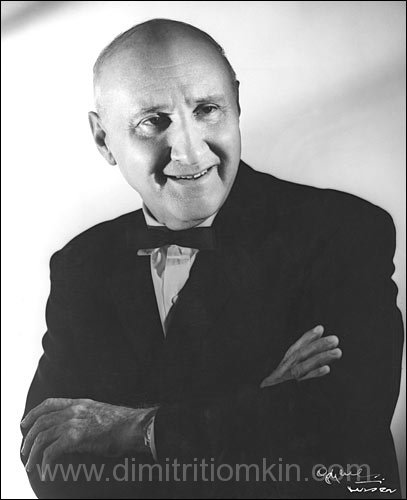
Dimitri Tiomkin publicity portrait, circa 1963
The gentleman, Dimitri Tiomkin, tells the record producer he has some difficulty with one of his eyes and asks if he would drive him to Windsor Square. (Tiomkin had surgery for a detached retina in 1962 and in March 1965 it was reported that the composer “has entrusted the problem of his failing eyesight to a noted S.F. ophthalmologist.”)
The record producer, James E. McEachin, was a Korean War veteran who would become a pioneering actor and author and whose distinguished career in film and television would span the next thirty years.
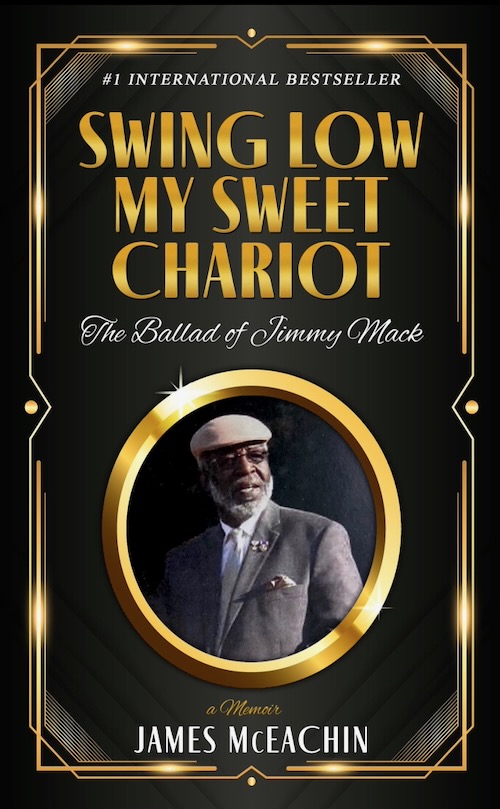
Swing Low My Sweet Chariot: The Ballad of Jimmy Mack, a Memoir by James McEachin, Rharl Publishing, 2021.
The chance encounter with Tiomkin led to a brief ride in McEachin’s machine to Tiomkin’s residence at 333 S. Windsor in neighboring Hancock Park, about a mile and half away. Topics of conversation during the ten-minute drive would include music, recording companies, and the world in general.
Tiomkin insisted on paying McEachin for the ride from which the driver “derived a great deal of pleasure.”
At the time, McEachin was on the verge of transitioning from producing records as Jimmy Mack (get it?) to acting under the same moniker. He would soon appear as Lonnie in I Crossed the Color Line (1966), also known as The Black Klansman. The movie was so bad, even McEachin later called it “the worst movie ever made,” as a result McEachin would never act under the name of Jimmy Mack again.
By the time he crossed paths with Tiomkin, McEachin had credits as a songwriter and/or producer on several dozen 45 rpm records beginning with “The Fight” (FF-1520) in 1959. A year later, he would write and record his first two songs, “Tuff Enuff” and “She’s All Right” (T-6908), with a teenage singer living in L.A. with relatives for the summer, Otis Redding. The recordings would not see release until 1967 and later.
After those early recordings, McEachin went on to form Brujem Publishing and found Mack IV Records, running both from his small apartment at 2607½ S. Manhattan Place in West Adams, in one of the first neighborhoods in Los Angeles. Released through Aura Records, an imprint of World Pacific, McEachin oversaw R&B and local harmony (doo-wop) groups, such as The Furys, The Lions, and The Lewis Sisters (Helen and Kay). Producing “If I Didn’t Have a Dime” (LB-1909) in 1964 he worked with arranger Jack Nitzsche. Nitzsche, on the brink of his breakout career with Phil Spector, would receive an Academy Award for Best Original Song in 1983 for co-writing “Up Where We Belong” with Buffy Sainte-Marie.
The drive with Tiomkin—himself a four-time Oscar-winner; his music was in theaters playing Circus World and The Fall of the Roman Empire—in the words of McEachin, “concluded by your inviting me to write you (at MGM, I think)…” Two years after the brief encounter, in April 1967, McEachin accepted the invitation and sent a two-page typed letter from his first home, a mid-century single-story residence off Crenshaw Boulevard and adjacent to Baldwin Village.
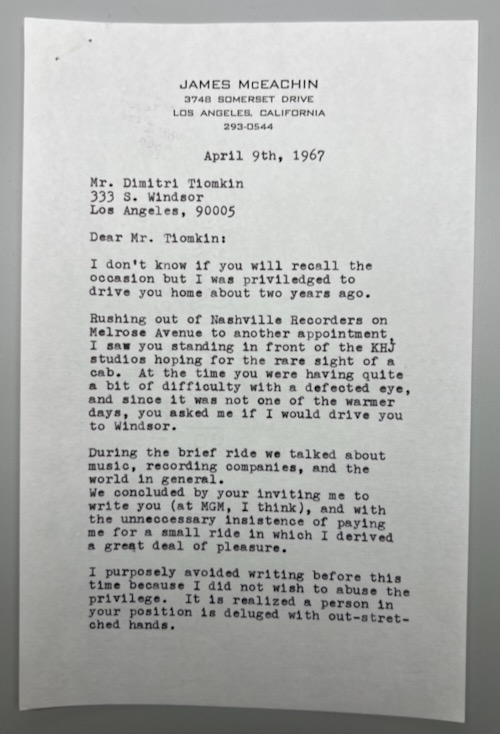
Letter to Dimitri Tiomkin from James McEachin, April 9, 1967, page 1
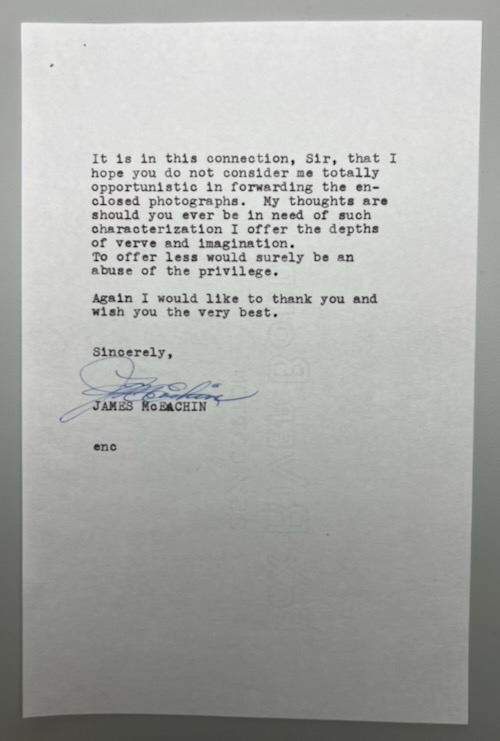
Letter to Dimitri Tiomkin from James McEachin, April 9, 1967, page 2
The 1965 Watts riots disrupted the record business in Los Angeles and Black music was shifting away from apolitical R&B and pop. As a result, in 1967 McEachin would seek acting gigs with the help of agent Alon Cory and wrote if Tiomkin should “ever be in need of such characterization I offer the depths of verve and imagination.” At the same time, Tiomkin was transforming and evolving from composer to film producer, with both MacKenna’s Gold (1969) and Tchaikovsky (1971) on the horizon.
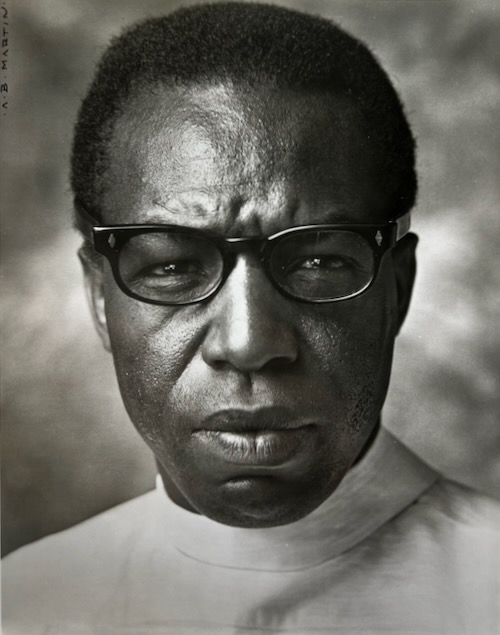
Enclosed with the letter were five black-and-white portraits of McEachin in character. In his Memoir, McEachin writes, “Alon sent out a flurry of letters to casting directors, pitching me as ‘an actor whom I think merits your attention’ or ‘a brilliant negro actor,’ along with an eight-by-ten photo of my mug.” The back of one headshot noted McEachin’s training with Lawrence Parke, the casting director and head of the Lawrence Parke Company of Actors, as well as additional training or theatrical experience under “Curtain Call” and “Princess.”
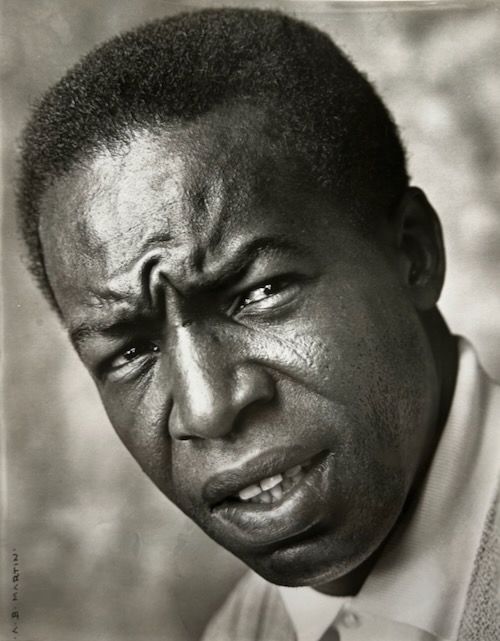
James McEachin headshot, photographer A. B. Martin, 1967
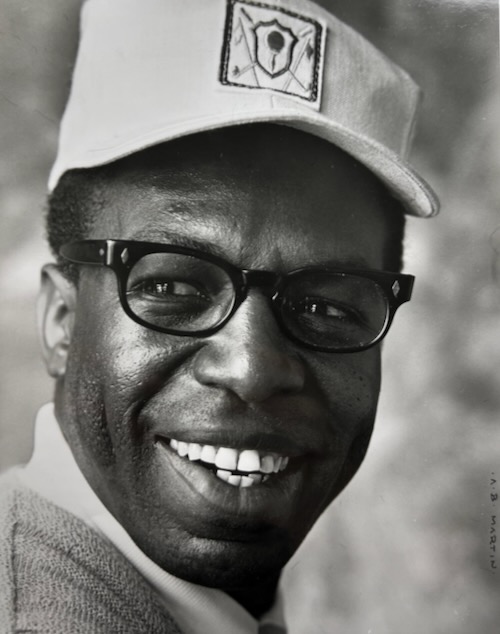
James McEachin headshot, photographer A. B. Martin, 1967
Two weeks after sending the letter, McEachin signed with MGM to appear in the Robert Altman directed film The Legend of Lylah Clare (1968) as an uncredited reporter.
McEachin went on to become an increasingly busy character actor and a familiar television presence. His role as the radio DJ and colleague of Clint Eastwood in Play Misty for Me (1971) substantially raised his film profile and Tenafly gave the Black actor a rare network starring vehicle.
If you went to the movies or watched television in the 1970s you would have seen him as the IRS agent in All in the Family, alongside Sidney Poitier and Harry Belafonte in Buck and the Preacher, as the FBI agent in The Rockford Files, as Lt. Brock in the new Perry Mason series, and, again with Eastwood, as Herb in Every Which Way but Loose.
Back in 1965 when McEachin exited Nashville Recorders, Tiomkin was standing at 5515 Melrose Avenue, adjacent to Paramount Pictures. There were a number of recording studios in the area, including Electro-Vox; however, the location of Nashville Recorders remains elusive as does the question of how country music fit the profile for the R&B producer.
That aside, the fact that McEachin and Tiomkin crossed paths for a drive in Hollywood was a chance encounter between two artists of different generations whose careers reflected the changing face of the film industry. The man who had scored some of the movies that defined Hollywood’s Golden Age was now sharing a car with an actor helping to embody the very different Hollywood emerging in its wake.
—by Warren M. Sherk
Sources
Letter and photographs courtesy Olivia Tiomkin.
“Dimitri Tiomkin On Mend After Eye Surgery,” Los Angeles Herald Examiner, March 19, 1962.
“It’s News to Me,” by Herb Caen, Thousand Oaks Star, March 28, 1965. On Tiomkin’s failing eyesight.
“One on the Aisle,” The Record, August 24, 1967. On McEachin signing with MGM.
Swing Low My Sweet Chariot: The Ballad of Jimmy Mack, a Memoir by James McEachin, Rharl Publishing, 2021.
Google AI prompt, “How long would it take to hail a cab on Melrose Avenue in Los Angeles in 1965,” August 2026.
Brujem Publishing joined the first name and initials of co-owners BRUce [Bruce Chessie, or possibly, Bruce Locke] and James E. McEachin.